
Wired vs Wireless Intraoral Cameras: A Complete Guide for Smarter Dental Care
In today’s dental world, capturing clear, high-quality images of the inside of the mouth has gone from a luxury to a necessity whether you’re a dental professional or someone focused on proactive oral health at home. Intraoral cameras are transforming how we detect dental problems early, communicate with dentists, and track progress over time. At…
In today’s dental world, capturing clear, high-quality images of the inside of the mouth has gone from a luxury to a necessity whether you’re a dental professional or someone focused on proactive oral health at home. Intraoral cameras are transforming how we detect dental problems early, communicate with dentists, and track progress over time.
At DentuluPro, we want you to understand the real difference between wired and wireless intraoral cameras, how they fit into modern dentistry, and which one might be right for your needs featuring insights and facts from Dentulu’s popular MouthCAM Intraoral Camera.
What Is an Intraoral Camera?
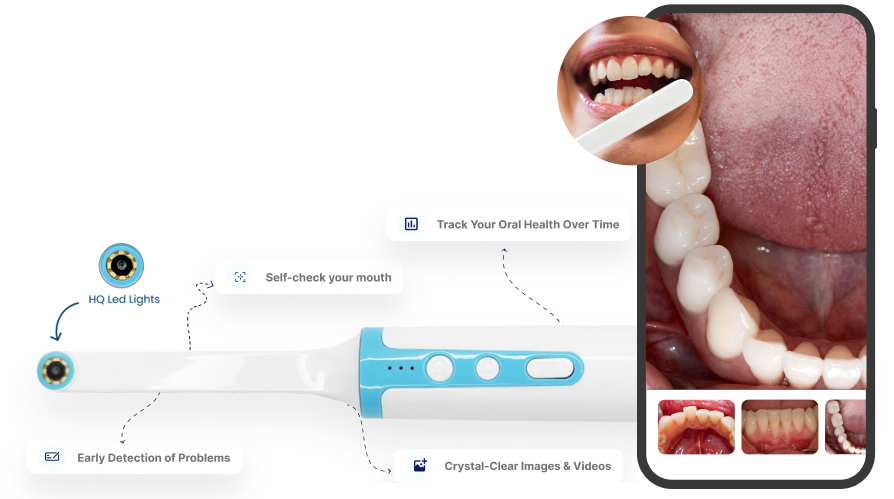
An intraoral camera is a small, handheld imaging device with a tiny lens and built-in lights that captures detailed views of your teeth, gums, and oral tissues. These images can show you and your dentist things that are hard to see with the naked eye such as early cavities, cracks, gum inflammation, tartar buildup, and more.
These cameras don’t just improve diagnosis they improve communication between patients and their providers, making treatment decisions more informed and collaborative.
Why Image Quality Matters in Oral Health
Picture this: You’re in a dental exam, and your dentist shows you a high-resolution image of the inside of your mouth rather than pointing with a mirror. Seeing is believing. Studies and dental professionals agree that intraoral cameras enhance early problem detection and improve treatment outcomes.
Benefits include:
- Detecting early signs of decay before pain starts.
- Identifying cracks, chips, and tissue changes.
- Educating patients visually for better understanding.
- Documenting before-and-after progress over time.
Wired Intraoral Cameras : Stability and Simplicity
Wired intraoral cameras connect to computers or tablets via USB cables. This plug-and-play design makes them reliable and consistent, ideal for both clinical and at-home settings.
Key Advantages
- Stable connection: With a corded USB link, there’s virtually no lag or interference in image transmission.
- Cost-effective: Wired models are often more affordable while still delivering professional-grade quality.
- No batteries to manage: You don’t have to worry about charging for frequent use.
Best For
- Home oral health monitoring
- Fixed workstations
- Cost-conscious users
Dentulu’s Wired MouthCAM, for example, delivers 1080p HD imaging with adjustable LED lighting and a wide 90° angle view, all powered through USB without needing batteries.
Wireless Intraoral Cameras: Freedom and Flexibility
Wireless intraoral cameras use Wi-Fi or Bluetooth to connect with smartphones, tablets, or computers. The biggest benefit? Mobility.
Key Advantages
- Greater freedom: No cables means you can move comfortably around the mouth or even use it in different rooms.
- Smartphone compatibility: Wireless models pair easily with iOS and Android devices, letting you view images instantly on your phone.
- Ideal for travel: Rechargeable battery power makes them great for on-the-go monitoring.
Best For
- People who want flexibility
- Users who review images on tablets or phones
- Those who value cord-free convenience
Dentulu’s Wireless MouthCAM supports both Wi-Fi and Bluetooth, works seamlessly with mobile devices, and offers up to 2 hours of continuous use before a quick USB-C recharge.
Clinical and Everyday Uses
Intraoral cameras aren’t just for dentists. Households, caregivers, and health-conscious individuals benefit tremendously as well.
For Dental Professionals
- Enhances diagnostic efficiency
- Improves patient communication
- Documents clinical findings
- Track treatment progress
For Patients and Families
- Monitor oral health between visits
- Share images with your dentist virtually
- Educate children and seniors on dental hygiene
- Track orthodontic changes or healing post-treatment
Dentulu’s MouthCAM, for example, is designed for everyone from parents and seniors to dental students and remote care providers making oral monitoring simple, accessible, and actionable.
How Intraoral Cameras Support Teledentistry
Teledentistry is reshaping access to oral health, especially for those unable to visit a clinic easily. With intraoral cameras, patients can capture professional-quality images and share them with dentists remotely for assessment, often saving time and unnecessary office visits.
Dentulu’s wireless model makes this seamless by connecting directly to mobile devices, allowing instant sharing during virtual consultations , a game-changer for preventive care and early detection.
Choosing Your Best Fit: Practical Tips
When picking a wired or wireless intraoral camera, consider:
✦ How you’ll use it
- Stationary home monitoring? Wired might be enough.
- Frequent travel or multi-user use? Wireless wins.
✦ Connectivity needs
- USB support vs. mobile apps and cloud sharing
✦ Ease of use
- Wireless models tend to feel more intuitive with smart devices.
✦ Budget
- Wired cameras often cost less upfront, while wireless offers premium convenience.
The MouthCAM line simplifies this choice by offering both wired and wireless versions with the same core imaging performance, so you’re choosing workflow flexibility and not image quality.
Final Takeaway
Both wired and wireless models like those offered in MouthCAM, deliver professional-grade 1080p HD images, so the choice often comes down to workflow and lifestyle preferences.
Whether you lean toward wired stability or wireless mobility, modern intraoral cameras empower you with detailed, real-time visual insights into oral health. They improve early detection, boost understanding between patients and clinicians, and support smarter, more efficient dental care.
With products like Dentulu’s MouthCAM , delivering professional-grade HD imaging, adjustable lighting, and seamless device compatibility, you can make oral monitoring part of a proactive health routine that’s flexible and accessible.
By understanding the strengths of both wired and wireless intraoral cameras, you can choose the right tool for your lifestyle or practice and ultimately keep your smile healthier for longer.