
Bridging the Gaps in Modern Dental Care: How Ecosystem Platforms Are Reshaping Practice Management, Diagnostics, and Patient Engagement
The healthcare landscape is undergoing a fundamental transformation driven by evolving patient expectations, rapid technological advances, and a growing body of clinical research connecting oral health to systemic wellness. Today’s dental practices are no longer evaluated solely on chairside clinical outcomes; they are judged on convenience, communication, diagnostic transparency, and continuity of care. However, as…
The healthcare landscape is undergoing a fundamental transformation driven by evolving patient expectations, rapid technological advances, and a growing body of clinical research connecting oral health to systemic wellness. Today’s dental practices are no longer evaluated solely on chairside clinical outcomes; they are judged on convenience, communication, diagnostic transparency, and continuity of care.
However, as practices attempt to modernize, many encounter a frustrating barrier: software fragmentation. Practitioners often find themselves managing disconnected point solutions using one vendor for patient scheduling, another for two-way SMS messaging, a standalone platform for teledentistry, and separate proprietary software for intraoral imaging or diagnostic lab reports. This fragmented infrastructure leads to administrative burnout, siloed patient data, and inconsistent patient experiences.
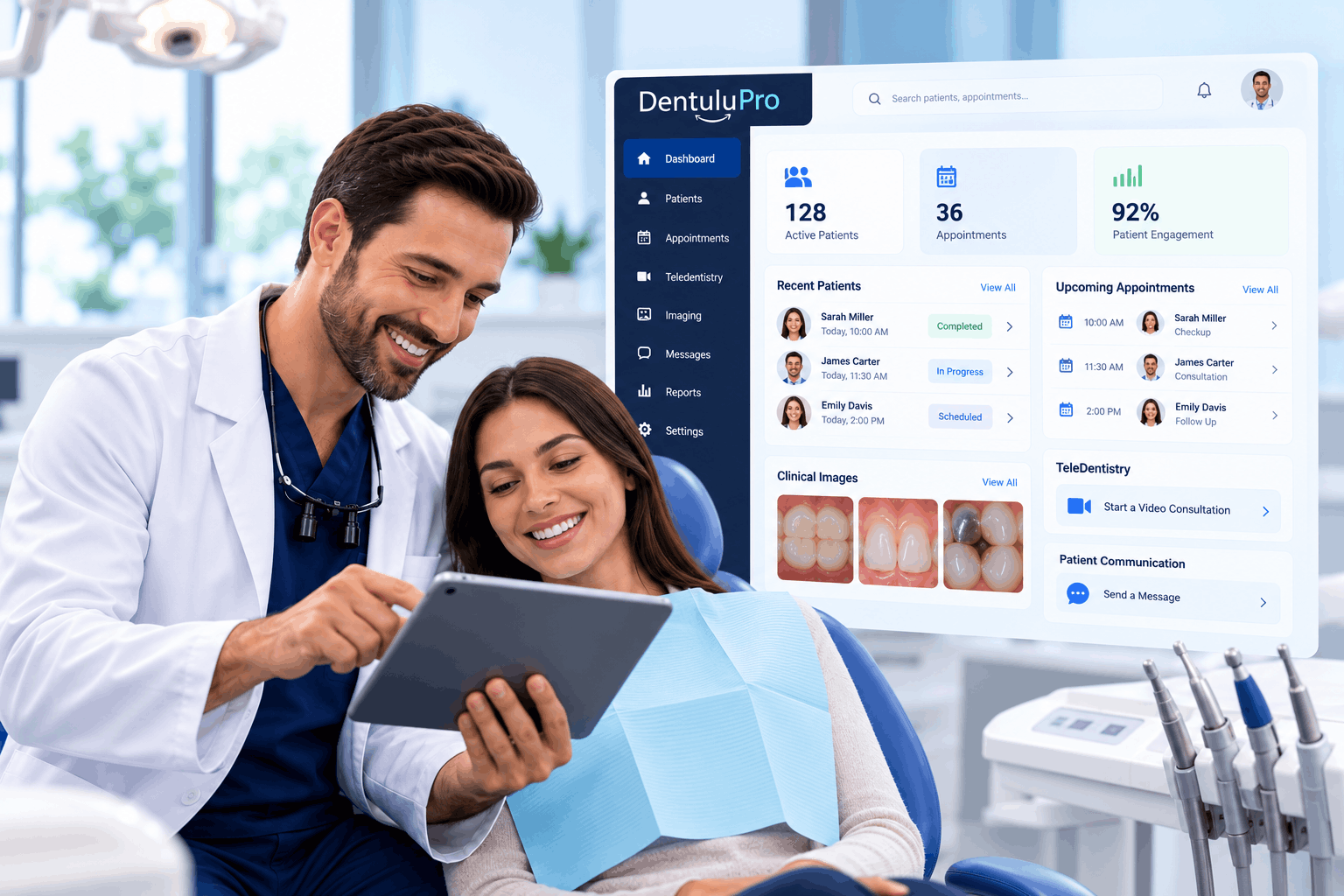
To overcome these operational challenges, the dental industry is moving toward integrated platform ecosystems. Platforms like DentuluPro are engineered to unite core practice workflows, clinical collaboration, advanced diagnostics, and patient communication into a single, cohesive digital environment.
- Transforming the Patient Relationship: From Episodic Visits to Continuous Engagement
Traditionally, dentistry has operated on an episodic care model. Patients visit the clinic once or twice a year for routine cleanings or seek immediate attention when experiencing acute dental pain. When patient interaction is strictly reactive, opportunities for preventive education, early diagnostic intervention, and long-term behavioral compliance are frequently lost.
By unifying practice communication and patient access within a single portal, integrated software ecosystems allow clinics to transition from isolated appointments to continuous, year-round patient relationships.
Automated Digital Onboarding and Patient Portals
Manual paperwork at the front desk creates unnecessary friction before a clinical encounter even begins. Digital intake tools allow patients to complete health histories, upload insurance documentation, and review consent forms on their own mobile devices prior to their arrival. Centralized family account management further simplifies scheduling and billing for households, reducing administrative overhead and front-office data entry errors.
Two-Way Communication and Automated Recall
Modern practices require flexible communication channels. Integrated platforms support HIPAA-compliant two-way text messaging, instant pre-appointment notifications, and customized recall reminders. This direct line of communication helps practices lower no-show rates, keep schedules filled, and maintain active dialogue with their patient base without increasing staff workload.
Remote Patient Monitoring (RPM)
Continuity of care relies on tracking progress beyond the clinical chair. Through structured remote monitoring workflows, clinicians can prompt patients to submit photo updates, answer standardized recovery questionnaires, or log compliance data between office visits. This capability is particularly valuable for tracking post-surgical healing, monitoring clear aligner therapy, or assessing home care management in high-risk periodontal patients.
- Unifying Telehealth, Digital Diagnostics, and Clinical Workflows
Expanding care options should not mean increasing operational complexity. Integrating teledentistry and digital diagnostic tools directly into existing management and charting workflows enables practices to modernize without disrupting daily clinical routines.
Teledentistry and Virtual Triaging
Virtual consultations provide a flexible avenue for initial patient screening, post-operative follow-ups, emergency triaging, and aesthetic consultations. By offering secure video calls and asynchronous photo submissions, practices can assess patient needs before scheduling an in-person visit. This ensures clinic schedules remain optimized for high-value procedures while offering patients a convenient entry point into care.
Connected Intraoral Imaging
Visual transparency builds patient trust and aids clinical diagnostics. Integrating high-resolution hardware, such as intraoral cameras (e.g., MouthCAM), directly into the ecosystem allows providers and patients to capture clear diagnostic images. These visuals automatically sync with patient records and can be shared via patient portals to visually explain diagnosis and treatment proposals, significantly improving case acceptance.
Interoperable Diagnostic Labs and Specialist Networks
Modern care often requires multidisciplinary collaboration. Integrated platform architectures streamline communication between general dentists, dental specialists, and third-party diagnostic laboratories. Standardized digital transmission of cases, diagnostic scans, and lab scripts minimizes turn-around times and ensures all providers operate with identical, up-to-date patient information.
- Expanding Clinical Pathways: Integrating Oral and Systemic Healthcare
Research increasingly highlights the intricate link between oral health and general physical wellness. Systemic conditions such as cardiovascular disease, metabolic disorders, and sleep apnea often exhibit early indicators or co-morbidities within the oral cavity. Dental practices are uniquely positioned to serve as front-line screeners for these conditions when equipped with the appropriate diagnostic tools and clinical workflows.
Salivary Diagnostics and Bacterial Profiling
Advancements in salivary diagnostic testing allow clinicians to identify specific oral pathogens, such as Porphyromonas gingivalis, alongside other inflammatory bacterial species. By incorporating salivary testing into routine periodontal protocols, practices move beyond visual inspection to objective, biomarker-based risk assessment. This biological data enables highly personalized treatment planning and precise tracking of therapeutic outcomes over time.
Airway and Dental Sleep Screening
Sleep-disordered breathing and obstructive sleep apnea (OSA) represent major public health issues that frequently go undiagnosed. Because dental professionals regularly evaluate the oral cavity and airway anatomy, they play a vital role in early identification. Integrated platforms facilitate standardized airway screening questionnaires, home sleep test (HST) ordering pathways, and coordination with board-certified sleep physicians, establishing a safe and compliant framework for dental sleep medicine.
The Strategic Path Forward for Modern Dental Practices
Delivering exceptional healthcare requires a careful balance between clinical precision, operational efficiency, and a seamless patient experience. Relying on disconnected point solutions introduces unnecessary friction for clinical teams and creates fragmented journeys for patients.
By adopting an integrated platform ecosystem like DentuluPro, dental practices, solo providers, and multidisciplinary healthcare networks can consolidate their technology stack into a single, scalable infrastructure. This connected approach streamlines administrative burdens, enhances diagnostic accuracy, supports whole-person health initiatives, and positions practices for sustainable long-term growth in a digital-first healthcare environment.
To discover how DentuluPro can help streamline your operations and expand your practice capabilities, visit DentuluPro.