
Digital Dentistry in 2027: From Individual Tools to Intelligent Practice Workflows
The future of digital dentistry is not simply about adopting more technology. It is about connecting the right technologies to create smarter, more efficient workflows for dental providers and their patients. Dental practices have access to more digital tools than ever before. Digital imaging, intraoral cameras, electronic health records, practice-management software, teledentistry, AI-powered solutions, digital…
Dental practices have access to more digital tools than ever before. Digital imaging, intraoral cameras, electronic health records, practice-management software, teledentistry, AI-powered solutions, digital scanning, laboratory platforms, and automated patient communication are becoming increasingly relevant across different areas of dental care.
But adding technology does not automatically create a better workflow. For dental providers, the bigger opportunity is to understand how these technologies can work together. As the industry moves toward 2027, digital dentistry is increasingly about connected workflows rather than isolated tools.
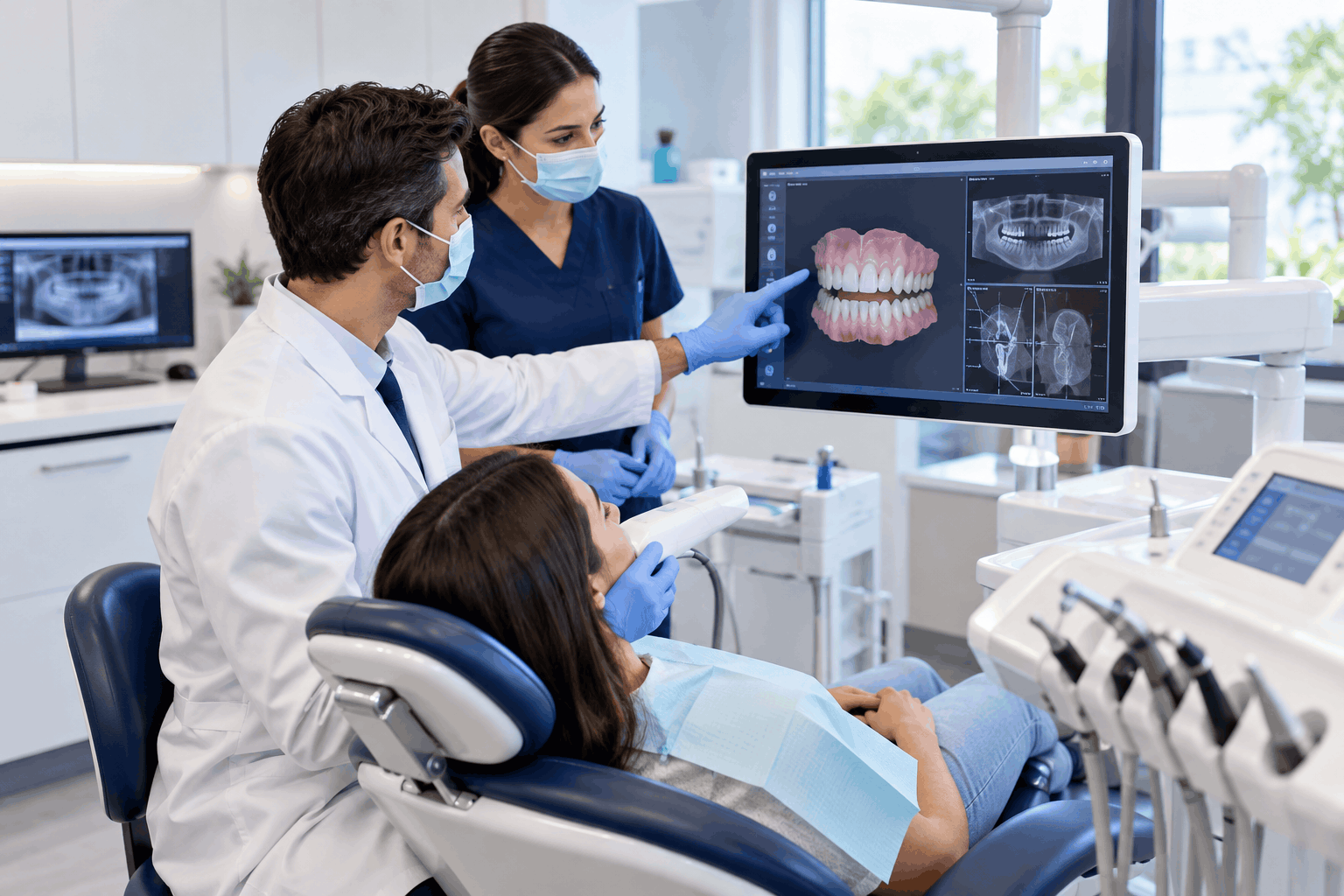
What Is Intelligent Digital Dentistry?
Digital dentistry refers to the use of digital technologies across clinical, administrative, diagnostic, and patient-care processes.
An individual technology may address one specific task. For example, an intraoral camera can capture detailed images, a digital scheduling system can help manage appointments, and an AI-enabled solution can assist with specific types of analysis.
An intelligent workflow looks at the bigger picture.
Instead of thinking about each technology separately, providers can consider how information moves throughout the patient journey:
Scheduling → Patient Information → Imaging → Clinical Assessment → Treatment Planning → Patient Communication → Follow-Up
- Moving From Standalone Tools to Connected Workflows
One of the challenges of adopting multiple digital technologies is that they can create disconnected workflows.
A practice may use one system for scheduling, another for imaging, another for patient communication, and another for laboratory coordination.
If these systems cannot communicate effectively, staff may still need to manually transfer information between platforms.
Connected workflows can help reduce unnecessary duplication.
- AI as a Provider Support Tool
Artificial intelligence is likely to remain an important area of digital dentistry in the years ahead.
AI is already being explored and used across areas such as dental imaging, documentation, patient communication, administrative workflows, and other practice functions.
AI may assist with:
- Organizing information
- Supporting image analysis
- Drafting documentation
- Summarizing information
- Supporting administrative processes
- Improving patient communication
- Identifying information that may require provider attention
The role of AI should remain clearly defined within the clinical workflow.
Dental providers must understand what an AI system is designed to do, how its outputs are generated, what its limitations are, and where professional review is required.
AI should be viewed as a supporting technology, not a substitute for clinical judgment.
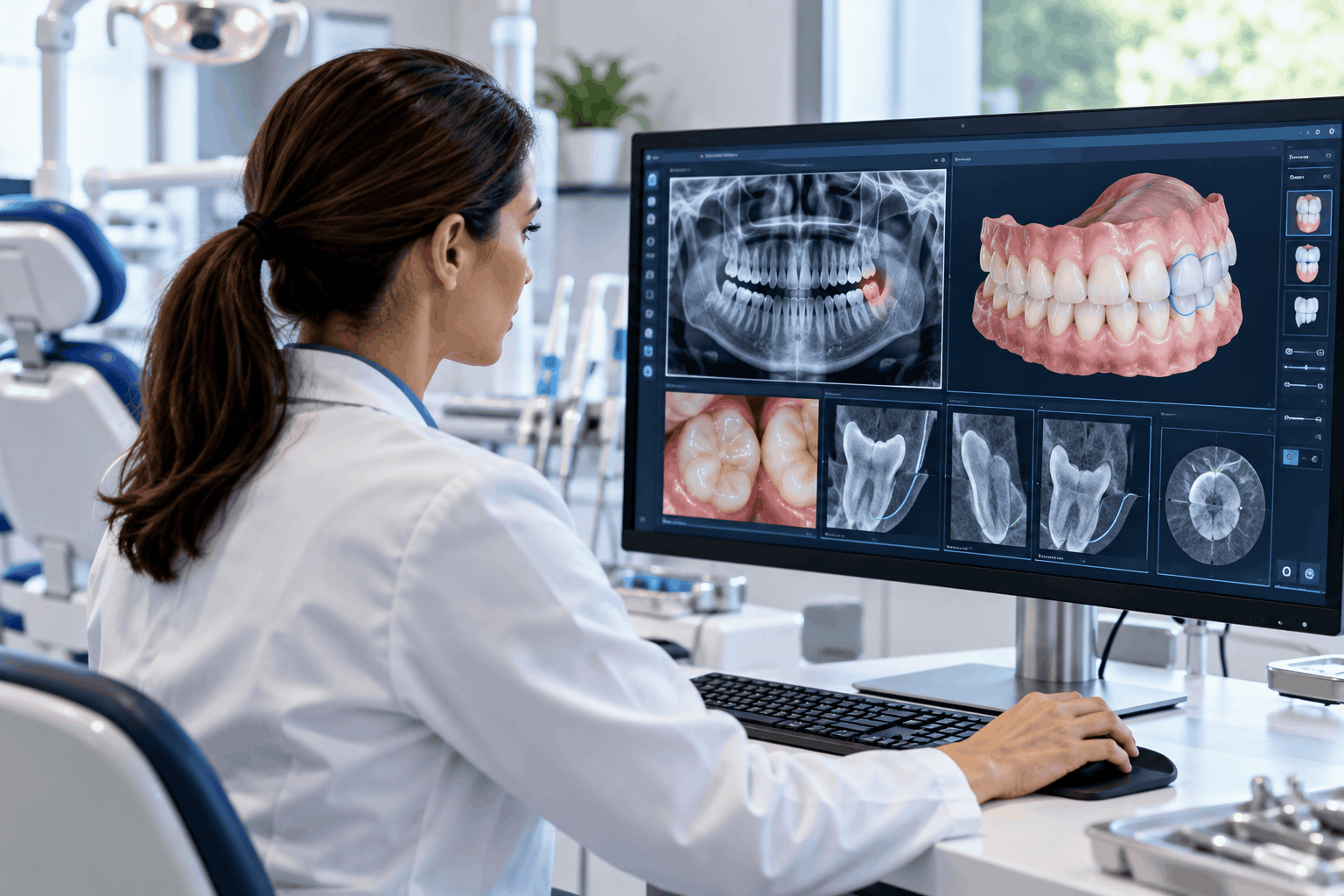
AI-assisted dental imaging can support clinical review while the dentist remains responsible for professional judgment.
- Digital Imaging Becomes Part of the Larger Patient Journey
Digital imaging is already an important component of modern dental practice.
Intraoral cameras, digital radiography, CBCT, and other imaging technologies can support clinical documentation, assessment, patient education, and treatment discussions.
The next consideration is how imaging fits into the broader workflow.
Instead of treating an image as an isolated clinical record, providers can consider how it contributes to:
Capture → Review → Document → Explain → Treat → Monitor
Visual information can also help patients better understand their oral health and the reasons behind recommended care.
When digital images are appropriately incorporated into patient communication and documentation, they can become part of a more connected care experience.
- Patient Communication Becomes Part of the Clinical Workflow
A patient’s experience with a dental practice extends beyond the time spent in the dental chair.
Appointment reminders, treatment explanations, educational content, follow-up messages, and other communications can all influence how patients interact with their care.
Digital communication tools can help practices organize these interactions.
Automation can support appropriate administrative communication, while providers and staff remain responsible for clinical conversations and patient-specific decisions.
The goal is not to remove the human element. It is to reduce repetitive communication tasks so dental teams can focus their attention where professional interaction is most valuable.
- Interoperability Will Become Increasingly Important
As practices adopt more digital technologies, interoperability becomes an important consideration.
Interoperability refers broadly to the ability of different systems to exchange and use information.
For dental practices, this may involve connections between:
- Practice-management systems
- Electronic health records
- Imaging systems
- Digital scanners
- Laboratory platforms
- Patient communication tools
- AI applications
- Teledentistry systems
A practice may have excellent individual technologies but still experience inefficient workflows if those technologies operate independently.
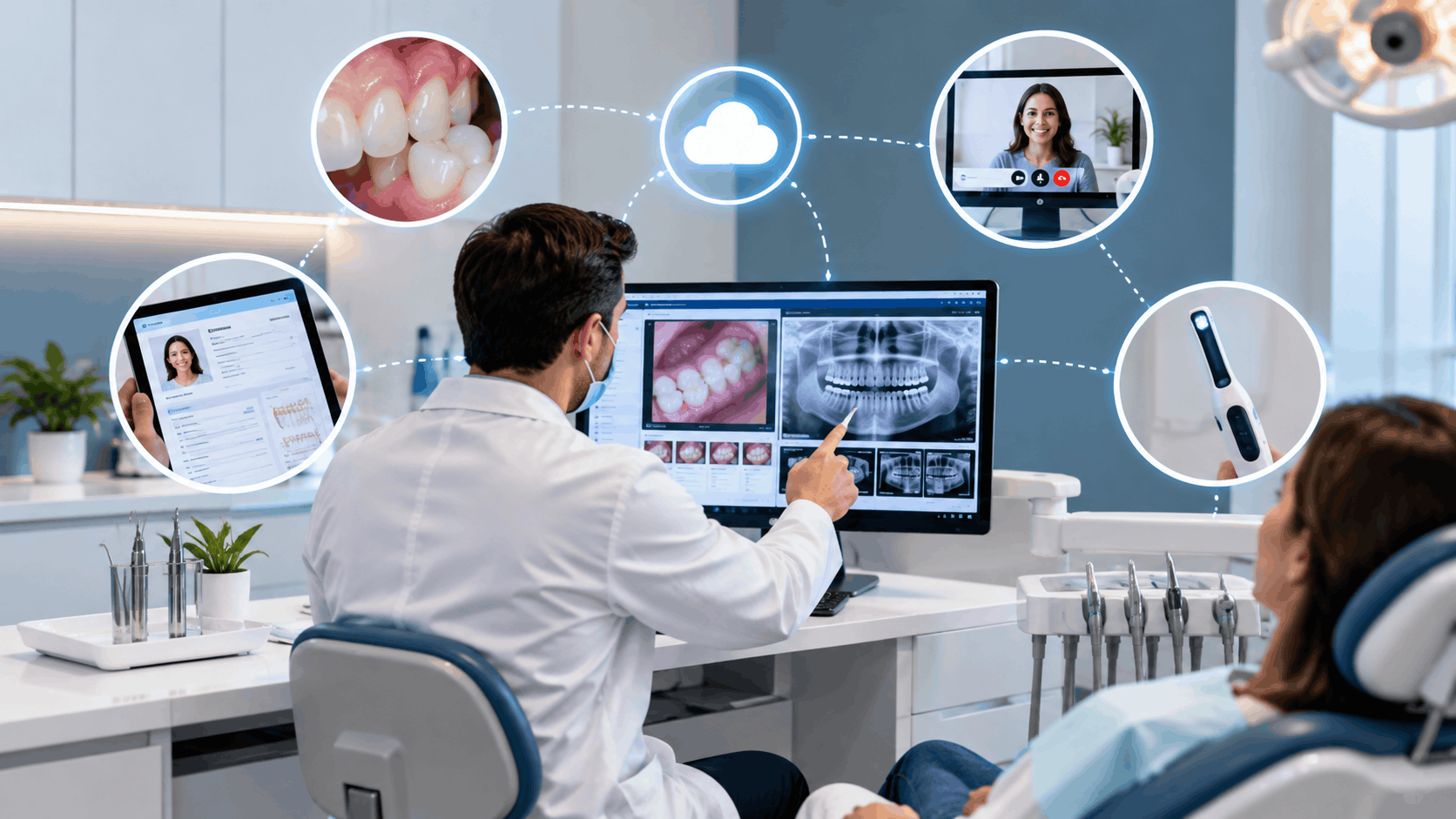
Connected dental systems can help bring imaging, patient records, communication, and care workflows together.
- Digital Dentistry Extends Beyond the Operatory
Digital transformation affects more than the clinical environment.
Modern dental workflows can involve multiple members of the team:
Front Office
Scheduling, patient communication, forms, and administrative processes.
Clinical Team
Imaging, documentation, assessment, treatment planning, and patient education.
Dental Laboratory
Digital case information, communication, design, and manufacturing workflows.
Patient
Appointments, education, communication, remote interactions, and follow-up.
When these processes are better connected, the practice can potentially reduce unnecessary handoffs and improve information flow.
The objective is not to digitize every step simply because technology is available.
The objective is to identify where technology can make a meaningful difference.
- Preventive Dentistry and Digital Diagnostics
Digital dentistry also creates opportunities to support more preventive approaches to oral healthcare. Traditional dental care has often focused on identifying and treating problems after they become clinically apparent. Digital technologies can support earlier information gathering and monitoring through tools such as:
- Digital imaging
- Intraoral photography
- Risk assessment
- Remote monitoring
- Salivary diagnostics
- AI-assisted analysis
- Patient education
These technologies do not replace clinical assessment.
Instead, they can provide providers with additional information that may contribute to a more comprehensive understanding of a patient’s oral health.
The appropriate use of each technology will depend on the clinical context, available evidence, provider judgment, and applicable regulations.
- How Providers Can Prepare for 2027
Dental practices looking to strengthen their digital workflows can start with a few practical steps.
- Map the Patient Journey
Identify every major step from appointment booking through follow-up.
- Identify Workflow Gaps
Look for repetitive manual tasks, unnecessary handoffs, duplicate data entry, and communication gaps.
- Review Existing Technology
Determine which systems are already working well and where integration is needed.
- Prioritize Meaningful Improvements
Focus on technologies that address a clearly identified clinical, operational, or patient-experience need.
- Evaluate Integration
Consider whether new technology can work with existing systems.
- Train the Team
Technology is only useful when providers and staff understand how to use it effectively.
- Maintain Human Oversight
Especially with AI-enabled tools, define where professional review and decision-making remain essential.
- Review the Results
After implementing a technology, evaluate whether it actually improves the workflow it was intended to improve.
The Future of Digital Dentistry Is Connected
Digital dentistry in 2027 does not necessarily mean that every practice will use the same technology.The more important shift may be from individual digital tools toward connected workflows.AI, digital imaging, intraoral cameras, teledentistry, electronic records, digital scanning, laboratory technology, patient communication, automation, and diagnostic technologies can each play different roles..
The future of digital dentistry isn’t about having more tools. It’s about making the right tools work together.